
As America turns 250, one question defines our next chapter: What kind of schools will shape the next generation of citizens?
The world is changing rapidly. AI is transforming industries. Technology is rewriting the rules of work, human connection, and civic life. And families are changing too — increasingly, parents expect to choose, not just accept, the schools that shape their children.
But one thing remains constant: education still matters. The quality of a child’s schooling still determines the quality of their future — and the future of our democracy.
Every thriving democracy needs an informed, engaged citizenry. Getting there requires exposing all students to a knowledge-rich curriculum and taking civics seriously —ensuring that students master the history, institutions, and civic understanding that a self-governing democracy depends on. And every parent wants to choose the right school for their child. School systems should be designed with both goals in mind: offering families a variety of educational options and also providing rigorous instruction that supports student learning.
That’s the work of the Johns Hopkins Institute for Education Policy.
We exist to advance a smarter, more pluralist education system — one that gives every family genuine options, delivers effective results, and prepares students not just for jobs, but for democracy itself.
The promise of the next 250 years depends on what happens in classrooms right now.
Principles of Educational Pluralism
Drawn from comparative research and policy studies on schooling in democratic societies around the world, these principles provide a framework for understanding how a wide range of educational models can coexist—while strengthening civic engagement. In educational pluralism, the government equally funds a wide range of schools—public, private, parochial, and more—holding all to the same set of high academic standards, regardless of their model.
-
Variety in School Models
Democracies should fund varied schools that reflect meaningful differences in values and approaches.

-
High Academic Standards
Every school must meet rigorous academic benchmarks to ensure positive outcomes for all students.

-

-

Variety in School Models
Democracies should fund varied schools that reflect meaningful differences in values and approaches.
High Academic Standards
Every school must meet rigorous academic benchmarks to ensure positive outcomes for all students.
-
-
Education Within Civil Society
Neither government nor individuals should hold absolute control over education systems.

-
Fair Access for All Families
All families deserve access to schools that align with their children’s needs and aspirations.

-
Strong Cultures and Curricula
Distinctive school cultures and rigorous curricula benefit all learners in democratic societies.

Education Within Civil Society
Neither government nor individuals should hold absolute control over education systems.
Fair Access for All Families
All families deserve access to schools that align with their children’s needs and aspirations.
Strong Cultures and Curricula
Distinctive school cultures and rigorous curricula benefit all learners in democratic societies.
In the News
-
David Steiner on Coherence, Content, and the Humanities
In this podcast, Johns Hopkins Institute for Education Policy Executive Director David Steiner explores the importance of coherence across curriculum, teacher preparation, and assessment, arguing that content-rich instruction and a renewed emphasis on the humanities are essential to strengthening student learning.

-
Revolutionizing ELA Assessment: Harnessing AI for Curriculum-Aligned, Evidence-Based, and Equitable Evaluation
In this report, David Steiner examines how aligning English language arts assessments with high-quality, content-rich curricula can improve validity and better reflect what students actually learn, making a case for more coherent, curriculum-integrated approaches to testing.

-
Most Homeschoolers Also Use An Array of Resources, Data Shows
In this feature, Johns Hopkins faculty highlight new research on homeschooling, showing that most families supplement instruction with a wide range of resources, from online programs to tutoring, revealing a more complex, hybrid approach to learning than commonly understood.

-
Democrats, This Is Why You Haven’t Fixed Schools Yet
Democrats for Education Reform cites Ashley Berner as she argues that resistance to school choice ignores family demand and evidence that diverse public schooling options can strengthen education and social cohesion.

David Steiner on Coherence, Content, and the Humanities
In this podcast, Johns Hopkins Institute for Education Policy Executive Director David Steiner explores the importance of coherence across curriculum, teacher preparation, and assessment, arguing that content-rich instruction and a renewed emphasis on the humanities are essential to strengthening student learning.
Revolutionizing ELA Assessment: Harnessing AI for Curriculum-Aligned, Evidence-Based, and Equitable Evaluation
In this report, David Steiner examines how aligning English language arts assessments with high-quality, content-rich curricula can improve validity and better reflect what students actually learn, making a case for more coherent, curriculum-integrated approaches to testing.
Most Homeschoolers Also Use An Array of Resources, Data Shows
In this feature, Johns Hopkins faculty highlight new research on homeschooling, showing that most families supplement instruction with a wide range of resources, from online programs to tutoring, revealing a more complex, hybrid approach to learning than commonly understood.
Democrats, This Is Why You Haven’t Fixed Schools Yet
Democrats for Education Reform cites Ashley Berner as she argues that resistance to school choice ignores family demand and evidence that diverse public schooling options can strengthen education and social cohesion.
-
The Democracy Project: An informed citizenry
We must do more to foster in young people the skills, knowledge, and tolerance they need to be better citizens, writes Ashley Rogers Berner, who studies the civic outcomes of democratic school systems around the world.

-
Education in an Age of Polarization
In New York University Law School's Democracy Project, Ashley Berner proposes a pluralistic education system, combining choice and accountability, to mediate polarization and improve outcomes.

-
Introducing Pluralism to Public Schooling
In commentary for American Compass, Ashley Berner proposes three levers—distinctive schools, content-rich exams, and strong career/technical connections—to improve opportunity and civic function.

-
What if we replaced districts with less rigid systems?
Ashley Berner argues in the LA Times that replacing America's rigid public school districts with more diverse school structures could help enhance social cohesion.

The Democracy Project: An informed citizenry
We must do more to foster in young people the skills, knowledge, and tolerance they need to be better citizens, writes Ashley Rogers Berner, who studies the civic outcomes of democratic school systems around the world.
Education in an Age of Polarization
In New York University Law School's Democracy Project, Ashley Berner proposes a pluralistic education system, combining choice and accountability, to mediate polarization and improve outcomes.
Introducing Pluralism to Public Schooling
In commentary for American Compass, Ashley Berner proposes three levers—distinctive schools, content-rich exams, and strong career/technical connections—to improve opportunity and civic function.
What if we replaced districts with less rigid systems?
Ashley Berner argues in the LA Times that replacing America's rigid public school districts with more diverse school structures could help enhance social cohesion.
Featured Faculty
Ashley Rogers Berner, director, and David Steiner, executive director of the Johns Hopkins Institute for Education Policy, are two of the four School of Education faculty members who have been listed among the nation’s most influential education scholars in the 2026 Edu-Scholar Public Influence Rankings.

Research & Publications
Institute faculty conduct comparative research and policy studies on schooling in democratic societies around the world, with compelling evidence that support for a broad range of educational models can strengthen democracy.
-
Educational Pluralism and Democracy
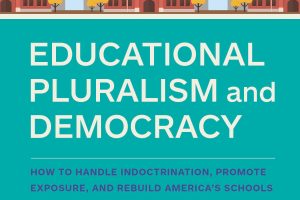
In Educational Pluralism and Democracy, education policy expert Ashley Berner envisions a K–12 education system that serves both the individual and the common good.
-
The Progressive Case for Educational Pluralism
Ashley Berner argues that diverse, publicly funded school options—rather than a single district system—better advance equity, reflect societal values, and expand educational opportunity, particularly for marginalized communities.

-
Educational Pluralism Database
This database comprises in-depth reports on the school systems of more than 60 countries, hosted in partnership with Balancing Freedom, Autonomy, and Accountability in Education and the European Association for Education Law and Policy.

-
Does Educational Pluralism Build Civil Society?
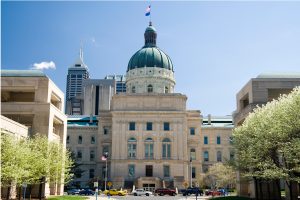
In this R Street Institute case study, Ashley Berner analyzes Indianapolis's marked shift toward educational pluralism, finding that school choice policies fostered a mutually reinforcing network of civic activity.
Educational Pluralism and Democracy
In Educational Pluralism and Democracy, education policy expert Ashley Berner envisions a K–12 education system that serves both the individual and the common good.
The Progressive Case for Educational Pluralism
Ashley Berner argues that diverse, publicly funded school options—rather than a single district system—better advance equity, reflect societal values, and expand educational opportunity, particularly for marginalized communities.
Educational Pluralism Database
This database comprises in-depth reports on the school systems of more than 60 countries, hosted in partnership with Balancing Freedom, Autonomy, and Accountability in Education and the European Association for Education Law and Policy.
Does Educational Pluralism Build Civil Society?
In this R Street Institute case study, Ashley Berner analyzes Indianapolis's marked shift toward educational pluralism, finding that school choice policies fostered a mutually reinforcing network of civic activity.